
OnlyFans free pages operate on a pricing structure that many consumers underestimate. BestOnlyFans research indicates these accounts have grown substantially as creators test audience interest before committing to monthly pricing. Understanding how PPV economics work on free pages prevents impulse spending and builds sustainable consumption habits.
Free pages function as entry points where the barrier to follow is removed, but nearly all content sits behind individual purchase walls. Unlike paid subscriptions where monthly fees grant broad access, free page users encounter constant micro-transaction decisions. A typical free page follower might receive three to five PPV offers weekly, with each purchase decision requiring independent evaluation against no baseline subscription value.

The PPV Revenue Model on Zero-Subscription Pages
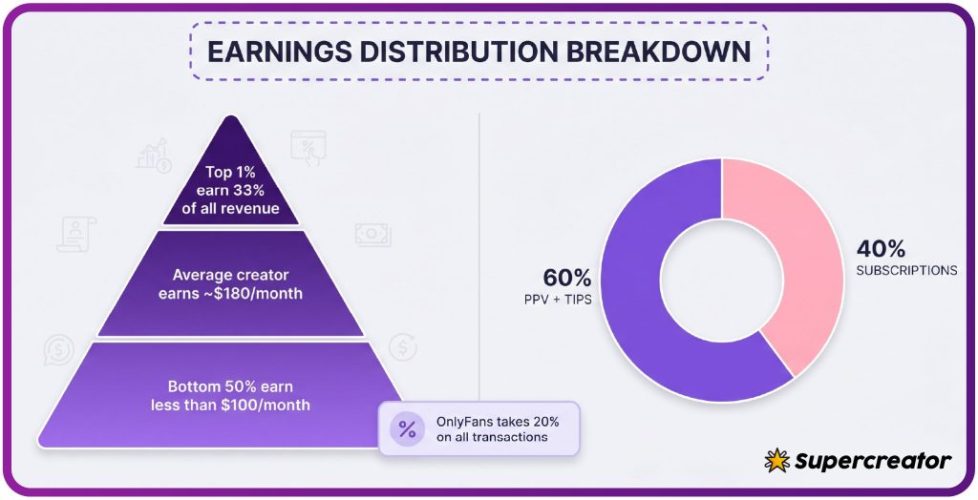
Creators on free pages face a fundamental challenge: generating income without recurring subscription revenue. The platform’s 20% fee applies universally, meaning creators retain 80% of every PPV sale regardless of page type. This identical split creates different strategic pressures for free versus paid page operators.
For free page creators, each follower represents potential revenue that must be activated through direct sales efforts. Without subscription income providing baseline monthly earnings, these creators depend entirely on conversion rates from free followers to paying customers. Consider a creator with 5,000 free followers: if 5% purchase a $10 PPV monthly, gross revenue reaches $2,500, but after the platform’s 20% fee, net earnings settle at $2,000. This illustrates why creators pursue volume strategies or premium pricing to compensate for low conversion typical on free pages.
Creators often front-load their most accessible content as free posts, then place PPV messages in direct message sequences where engagement is highest. This mirrors traditional sales funnel design: awareness, interest, then monetary commitment.
The psychological dynamic differs markedly between page types. Paid subscribers have already committed financially and expect content inclusion in their monthly fee. Free followers operate with no sunk cost and evaluate each purchase independently, making price sensitivity typically higher. Platform data patterns suggest free page conversion rates to any PPV purchase often fall between 2-8%, significantly below engagement rates on paid pages where subscribers have already overcome the initial payment barrier.

Typical PPV Price Ranges and Content Tiers
PPV pricing on free pages follows observable patterns that correlate with content format, length, and perceived exclusivity. While individual creators set their own rates, market forces create clustering around specific price points.
- $3-$5 single photo or teaser clip
- $5-$10 short video under three minutes
- $10-$20 extended scene or themed set
- $20-$35 premium or rare content
- Up to $50 maximum platform-allowed unlock for exclusive material
| Content Category | Typical PPV Range | Common Length/Format |
|---|---|---|
| Single image | $3-$7 | Static photo, often themed |
| Short video | $5-$12 | Under 2 minutes |
| Extended video | $12-$25 | 3-10 minutes |
| Photo set | $8-$18 | 10-30 images |
| Premium/exclusive | $25-$50 | Custom or rare content |
Price positioning within these ranges signals creator strategy. Lower-priced PPV often indicates volume-focused approaches or newer creators building purchase history. Mid-range pricing suggests confidence in content quality. Premium pricing typically accompanies exclusive material or established creator reputation.

Bundle Structures and Psychological Pricing
Creative packaging transforms individual PPV items into compelling propositions through structural and temporal techniques. Understanding these methods helps consumers distinguish genuine value from manufactured urgency.
- Progressive unlock sequences increasing in price
- Time-limited exclusive windows
- Themed collection completeness appeals
- Subscriber-count milestone specials
- Tip-gate access to bonus material
Progressive sequences present content in numbered or chronological order with escalating prices, creating completion bias where consumers feel compelled to continue. Time-limited windows exploit scarcity perception even when digital content faces no actual supply constraints.
Themed collections bundle related content with discount framing against hypothetical individual purchases. Milestone specials leverage social proof, suggesting widespread participation justifies individual spending. Tip-gating inverts the PPV model by establishing minimum tip thresholds rather than fixed prices, introducing variable cost uncertainty that can exceed standard PPV amounts. Tips on the platform can reach $100, creating scenarios where enthusiastic followers spend substantially more than any fixed PPV price would have required. Impulse PPV purchases accumulate rapidly without deliberate evaluation frameworks.
Establishing consistent pre-purchase criteria prevents regret and maintains budget discipline.
Evaluating Unlock Value Before Purchase
Systematic evaluation before unlocking PPV content protects against disappointment and overspending. Consumers applying structured criteria consistently report higher satisfaction with purchase outcomes. The following five-step framework supports disciplined decision-making:
- Does the description specify length and content?
- Is there a clear thumbnail preview?
- How recent and consistent is the creator’s posting?
- How does price compare to similar PPV offerings?
- Does this fit within my preset monthly limit?
| Factor | Positive Indicator | Negative Indicator |
|---|---|---|
| Description quality | Specific length, content details, format noted | Vague promises, no technical specifications |
| Preview presence | Clear thumbnail, recognizable scene | Blurred or generic placeholder |
| Posting consistency | Regular updates, recent activity | Extended gaps, sporadic presence |
| Price competitiveness | Aligned with similar creator offerings | Significant premium without justification |
| Budget alignment | Within monthly allocation | Requires budget adjustment or overspend |
Five protective measures for PPV buyers: verify creator activity level, check for duplicate resold content, confirm no external payment requests, use platform wallet for spending caps, and retain purchase records for disputes. BestOnlyFans methodology aggregates anonymized transaction data to identify pricing patterns without revealing individual creator strategies.
BestOnlyFans PPV Price Index for Free Pages
Systematic price tracking across free page categories reveals median costs that establish market benchmarks for informed purchasing. The index operates on categorical aggregation rather than creator-specific tracking, protecting privacy while illuminating market structure.
Current data shows substantial variation within categories, with standard deviations often exceeding 40% of median prices. This spread indicates genuine market differentiation rather than price-fixing coordination. Consumers benefit from recognizing their personal price elasticity across content types. the ranking site analysis identifies that free page followers who establish personal median price thresholds before browsing reduce total monthly expenditure by 25-35% compared to unstructured purchasing patterns.

For additional community perspectives on free page experiences and pricing discussions, many users reference onlyfans free reddit threads where consumer experiences aggregate around specific creator practices and value assessments.
Managing Monthly PPV Expenditure
Free page economics enable unbounded spending through accumulated micro-transactions. Without subscription caps, consumers require self-imposed controls to prevent monthly totals from surprising. A consumer purchasing just two $8 PPV messages weekly accumulates approximately $64 monthly—exceeding the cost of many paid subscriptions at the $4.99 minimum base price.
- Dedicated PPV spending log
- Weekly total review against budget
- Per-creator cost accumulation awareness
- Seasonal spending pattern recognition
- Annual comparison to hypothetical paid subscription costs
Platform wallet funding represents the most effective structural control. By pre-funding a fixed amount rather than connecting cards for each transaction, consumers create natural spending ceilings. When wallet balance depletes, additional purchases require deliberate replenishment decisions. The platform’s card verification hold of $0.10, refunded within days, appears during initial setup but does not affect ongoing wallet functionality.

Retrospective analysis reveals whether free page spending exceeds equivalent paid subscription costs for similar content access. Some heavy PPV users discover their monthly totals would purchase multiple premium subscriptions, suggesting strategic reconsideration of consumption approach. Paid chat features, commonly priced $3-$5 per message, add additional spending vectors that compound PPV expenditures for engaged followers.
Platform Protections and Refund Realities
Consumer expectations about purchase security often exceed actual platform protections. Understanding genuine recourse limitations shapes appropriate spending caution.
- All sales typically final per terms
- Content description disputes rarely refunded
- Technical delivery failures may qualify for platform review
- Chargebacks risk account termination
- Creator block prevents further purchases but not past access loss
The platform’s terms of service establish PPV purchases as final transactions, with narrow exceptions for technical failures preventing content delivery. Subjective dissatisfaction with content quality, length, or description accuracy generally fails to qualify for refunds.
Dispute pathways exist but face significant evidentiary requirements. Consumers must document specific platform-side delivery failures rather than content-content mismatches. The 20% platform fee structure creates institutional incentive to minimize refund volumes.

Account-level consequences protect the platform ecosystem. Payment chargebacks trigger security reviews that may result in account termination, removing access to previously purchased content regardless of dispute merit. This structural asymmetry favors creator interests in payment disputes. Additionally, when creators raise prices, auto-renew stops for existing subscribers, though their paid access continues until the current period ends—a mechanism that also applies to price adjustments on promotional offers that began below the standard $4.99 minimum.
FAQ
What is the maximum amount a free page can charge for one PPV message?
The platform caps individual PPV messages at $50. This maximum applies universally across page types, with no distinction between free and paid subscription pages. Creators cannot exceed this limit regardless of content exclusivity or custom nature.
Do creators ever offer discounts on PPV content to free followers?
Promotional pricing occurs through several mechanisms. Limited-time discounts on specific messages, bundle pricing that reduces per-item cost, and occasional free PPV distributions as relationship-building tools. However, the base $4.99 subscription minimum does not apply to PPV pricing, which can begin at any amount. Promotional first months on paid pages may drop below $4.99—for example, $3 introductory pricing—but base subscription rates must remain at or above the minimum threshold.
Can I get a refund if I buy a PPV message and the content does not match the description?
Refunds for content-description mismatches are extremely rare and require specific evidence of technical misrepresentation. The platform generally considers PPV purchases final once content is technically delivered. Dispute success typically requires proving the delivered file was corrupted or inaccessible—not merely lower quality than expected.
How can I tell if a creator regularly overprices their PPV content?
Comparison shopping across similar creators reveals pricing positioning. Established overpricing patterns include: consistent premiums above category medians without quality differentiation, frequent repackaging of identical content as new releases, and heavy reliance on urgency tactics. Cross-referencing consumer discussions enables identification of problematic practices.
